A river needs to stay in the watershed where it is birthed for that river system to remain healthy- Friends of the Eel River

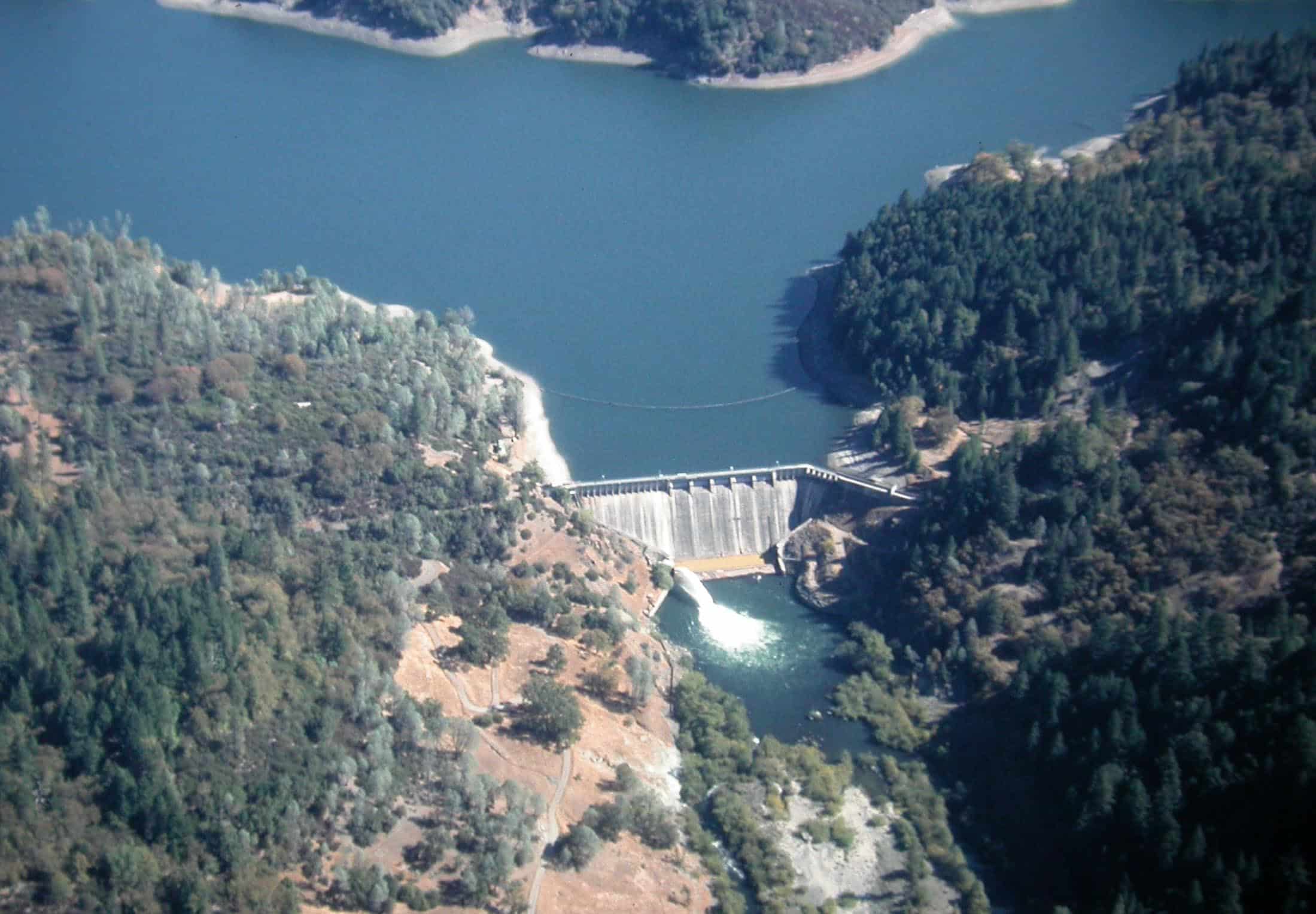
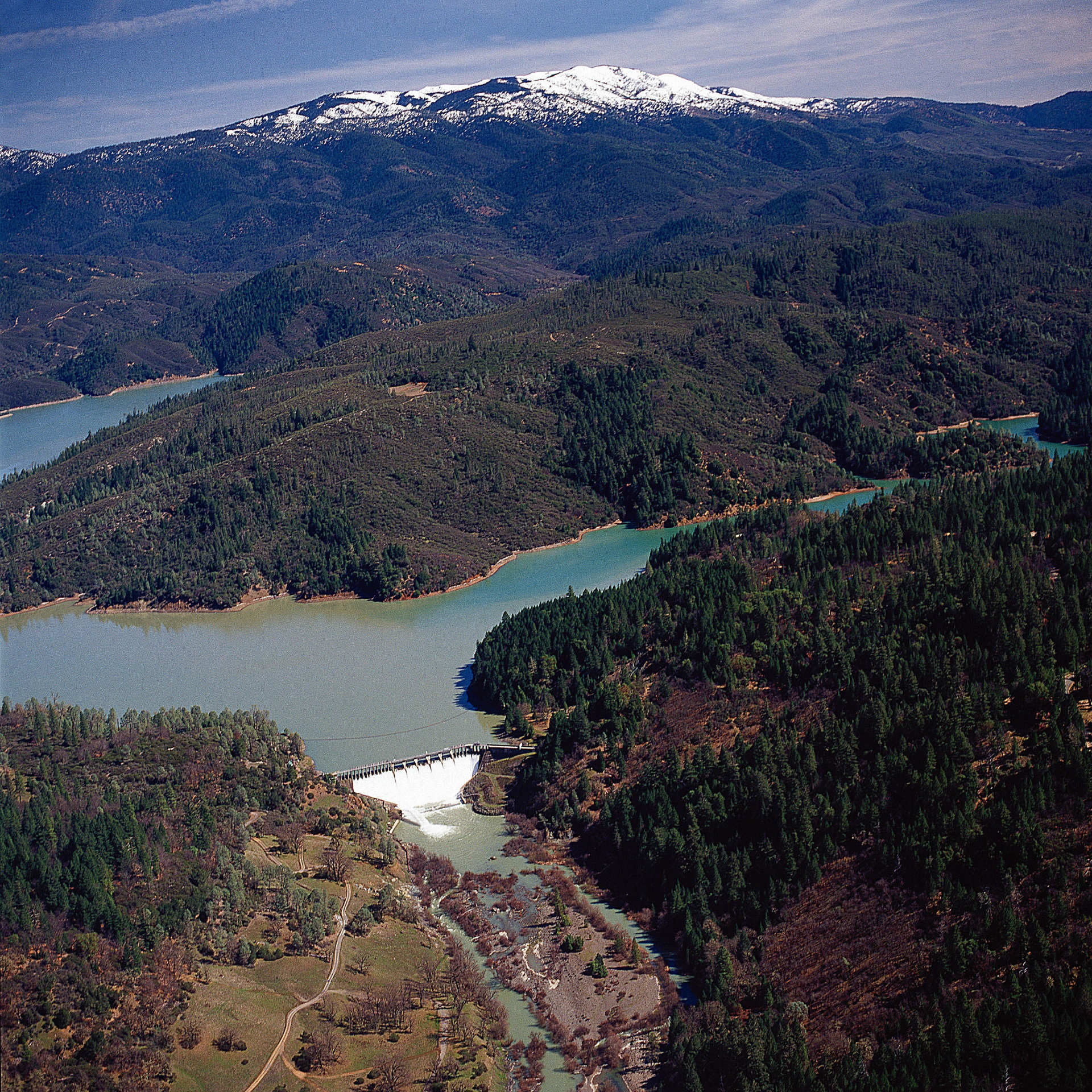
The Eel River is California's third largest watershed and third largest salmon producing river. This fishery was the first to fail on the north coast, before the Klamath and before the Sacramento. The Eel's headwaters are dammed and diverted to the Russian River, taking more than half of this cold, clean water so necessary for a healthy fishery to mask the problems on the Russian. It's dams are now a century old, block spawning and rearing habitat so necessary to this once vital fishery and hold back much needed gravels for a fully operative river system.

If we are to deal effectively with global warming, then we must correct and stop the abuse that has lead to this circumstance. This issue is in the north coasts' back yard, in the counties of Marin, Sonoma, Lake, Mendocino, and Humboldt. Rivers and watersheds respond and heal when we humans stop destructive practices. Please help us heal the Eel by joining our efforts to remove two antiquated dams and close a water diversion tunnel owned by Pacific Gas and Electric company, PG&E, that supplies water to the Russian River via their Potter Valley Hydroelectric Project, PVP. The 9 mega watts of power this project produces for less then half the year is not cost effective and destructive to both fish and a once healthy watershed. This is truly an unsustainable water delivery system in the guise of a power plant.


Seven Reasons to Save the Eel River
and Take Down the Dams
- Friends of the Eel River

Reflections on the tragic 100th anniversary of PG&E’s Potter Valley Project (PVP) tunnel, Cape Horn Dam, Van Arsdale Lake, and later construction of Scott Dam and Lake Pillsbury.

David Keller, Bay Area Director, Friends of the Eel River

The Eel River has been severely damaged during the last century by diverting water through the PVP to the Russian River.  It’s time to restore the health and wealth taken from the Eel River. 

Here are 7 reasons to take down the dams and save the Eel River. (Read more)


FOER Store
Visit the Friends of the Eel River Store for cool items


Click here for a Friends of the Eel River flash presentation on the history and impact of the Potter Valley Project Dams on the Eel and Russian Rivers.


membership

North Coast Railroad Authority


Underwater Hazzard Photo: John Mahoney


Article Links


About NCRA


NCRA DEIR Spring 2010 (soon)


FOER Comments
on NCRA's DEIR 2009


Fix Pollution or Else-April-2009
Attorney General says NCRA must deal with underground problems
or face delay in resumption of service


Toxic Cleanup Must Come Before Freight

Railroad Proposals Under Scrutiny 2008

NCRA-Ten Terrible Truths- EPIC

The Railroad Dilemma-2007

Letter from FOER regarding Novato advance, May 29, 2007

From the 2006 CAL Trans audit of the NCRA reported in 2007(HIGH RISK STATUS)

NCRA Strategic Plan Update
February 15, 2007


Train Whistling in the Wind-2006

North Coast Railroad Authority (NCRA) 2006 Strategic Plan and Update

NCRA Approves Operator Contract
September 14, 2006


Business plan for the Northwestern Pacific Railroad Company, October 2006

The Northwest Pacific Railroad was the first and only railroad to be officially closed by the Federal Railroad Authority. At the time of closure in 1998, the railroad contained more than 208 damaged areas along the 216 miles of track and was within numerous violations of the Fish and Game Code, Health and Safety Code and the Water Code, all meant to protect our Public Trust resources.

The cost of stabilizing the damaged areas to a Class 1 designation(no passengers) has been estimated to be $642,000,000 by the Federal Emergency Management Agency (FEMA). Maintenance and repairs could be around a million dollars a year for a railroad running along the waters edge of the main-stem Wild and Scenic Eel River, a seismically active and geologically unstable area. As owners of the peoples railroad, California taxpayers will be responsible for these maintenance and repair costs.

The North Coast Railroad Authority (NCRA) intends to restore the railroad with the initial focus being on opening operable blocks in the South from the interchange at Lombard, traveling north to Willits. Environmental Consent Decree (ECD) issues are being delayed until there is reasonable rail improvement.

The NCRA 2006 Strategic Plan and Progress Report states: "The California Transportation Commission (CTC) has previously asked NCRA to report on its ability to comply with the ECD if the rail is not extended through the Canyon. As stated above, it is NCRA’s intent to eventually open the entire line and thereby address the ECD issues. However, if the rail was not extended through the Canyon, it would be doubtful that NCRA would ever have the financial means to address the ECD through the canyon area."

Friends of the Eel River are very concerned about the health and potential recovery of the Eel river and have been following the railroad saga for many years because of it's past and potential future impacts to the river. We have tried very hard to maintain a neutral stance so we could evaluate various proposals for repair or removal of the railroad. In the process we are uncovering major holes in the statements being put forth by the NCRA. In their recent press release it sounded like the railroad was a soundly put together project, funded and engineered and would be soon roaring down the track. Nothing could be further from the truth. The operator chosen by the NCRA Board in order to release government funding is in the process of being put together as a Limited Liability Corporation, L.L.C. and is not completed yet to my knowledge. The company wanting to reopen the hard rock mine at Island Mountain, in the heart of the main stem Eel River canyon, has not even completed their permitting request from the Planning Department in Trinity County, since that twelve mile section is in that county. The mine will have to go through various environmental reports which take money and time. It appears that the operation of this entire railway line is contingent on the mine being successfully permitted as it is promised to produce about a million dollars or so for the rail line. The port of Humboldt is a long way from becoming an international port with container shipments to be further moved via the railroad. This project is proposed to be a public private joint venture and is being supported (pushed) by Democrates and justified with ignorant statements like " it is better we repair the railroad because it is better to fix it than let it fall into the river." Yes, there are miles of railroad ties bleeding toxins along the way which can be easily removed along with the tracks that would not create new disturbances. So far no one has come along with a feasible plan to restore the tracks through that section of the river canyon in a transparent environmentally sound manner. There will be a public hearing at the California Transit Commission (CTC) on October 11 and 12, 2006 some where in Santa Rosa. We will post the meeting place as soon as we receive that information. Our current question is "Is this just another run on taxpayers money?"


Train Mine Numbers

  • The Island Mountain Mine report and the 2006 NCRA Strategic Plan estimate 6,000,000 tons will be mined from the quarry every year.
  • This will produce approximately 2,400,000 cubic yards of crushed rock per year.
  • It is assumed that a single rail car can transport 100 yards of material, a train is limited 25 cars due to the weight, and that trains operate 260 days a year (weekdays).
    This would produce approximately 10 trains a day during days of operation (outbound and return).
  • In addition, the 2006 NCRA Strategic Plan estimates up to 1000 containers a day moved to and from the port of Humboldt Bay.
  • Assuming 50 double stacked cars per train this would be an additional 10 trains per day.
  • These two rail uses potentially add up to 20 trains a day.
  • This is 20 times the number of trains estimated to move local goods (i.e. lumber) and garbage which could be as many one train a day.


In the News


A video of the Novato City Council meeting concerning the proposed resumption of freight train service. July 19, 2007

Freight trains raise ruckus in Novato, read the article from the Marin IJ, July 9, 2007

WWW.STOPNCRA.ORG


Dear Editor, I submit the following letter in response to a recent IJ Editorial. (November 1, 2008)
NCRA Freight Settlement


The IJ editorial, Novato council shouldn't derail freight settlement reflects a lack of understanding of the depth of destruction that the NCRA is planning on the Eel River. In order to enable freight to become a money making enterprise, NCRA plans to mine Island Mountain Quarry on the Eel River. NCRA would ship about 6 million tons of gravel each year from this quarry if allowed to operate. It would be the largest open pit mine on any wild & scenic river in the US. The Eel river canyon is subject to floods, landslides, earth quakes and has proved to be an engineering nightmare for the railroad's previous owner. They spent a million dollars each month maintaining track there. Salmon, bald eagles and other endangered species would be harmed by starting up freight. I recently flew over the quarry and filmed it and about 20 miles of the beautiful river. The YouTube video can be seen here:


The issue with Novato's City Council is not irresponsibility in spending money on its lawsuit against NCRA, it's an issue of the irresponsibility of allowing this unprecedented destruction on the Eel River to proceed. About 30 rail cars would be needed each day to haul all that gravel, through Novato. ---John Parulis

Photos from the NCRA's 2002 Capitol Assessment Report


NCRA Ownership of Island Mountain Quarry and Potential Conflict of Interest

Historical Timeline of NWP and the Mendocino County Railway Society

NCRA Press Release, May 10, 2006

A railway in the River, what questions to ask, excerpt from FOER's virtual fishtent


ACTION:
Contact the Northern California FEMA Regional Environmental Officer

Sandro Amaglio
Regional Environmental Officer
Federal Emergency Management Agency
Region IX
Building 105, P.O.B. 29998
Presidio of San Francisco
San Francisco, California 94129-1250

Back to top

Friends of the Eel River Fish Counts at the Potter Valley
Project Fish Ladder:

Van Arsdale Fish Count Station- 19 MAY 2010
Final numbers for the season.

Chinook count:
516 (212 male, 140 jack, 164 female).

Steelhead count:
324 (159 male, 165 female).


Scott L Harris
Associate Biologist (Marine/Fish)
Northern Region
PO Box 1690
Willits, CA 95490
707-459-2238

Van Arsdale is the bay for the water diversion
tunnel at Cape Horn Dam, the PG&E Potter
Valley Hydropower Project, and the site of the
oldest fish counting station in California. Built
in 1922 as part of the licensing for the second
dam to be built on this system, Scott Dam. By
this time three generations of fish were lost
because Cape Horn Dam did not have a fish
ladder, between 1907 and 1922. It is said that
only 40% to 45% of the fish that arrive at this
site actually are able to make it up this fish
ladder, demonstrating that fish ladders really
do not solve the problem of getting salmon to
where there is adequate and safe spawning
and rearing habitat.

The next generation is then severely interfered
with by dams. These dams block at least 125
miles of prime spawning and rearing habitat,
but recent GIS maps indicate that there could
be more than 1,000 miles available for this
purpose. Loss of this fishery has impacted the
north coast from Eureka to Bodega Bay
fishing industry with the loss in the billions of
dollars.


fishtent
The Friends of the Eel River Fish Tent
Learn more about this fabulous display created by FOER to educate people about the condition of the Eel River and what can be done about it; including excerpts from the display panels.