Water News and Updates
Energy Production, Sprawl Threaten America's Rivers
September, 2006 - this article by the Environment News Service states
"the
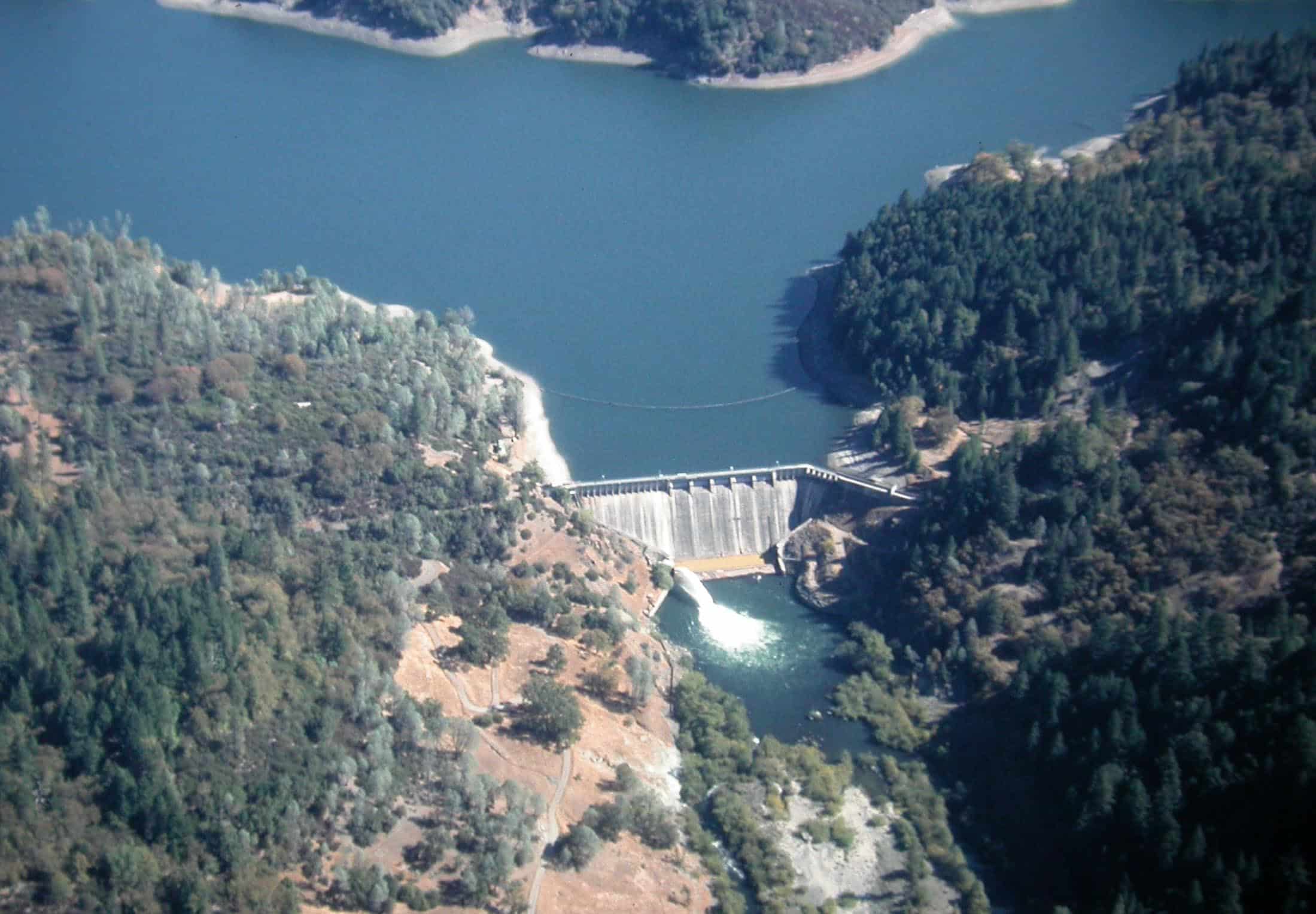
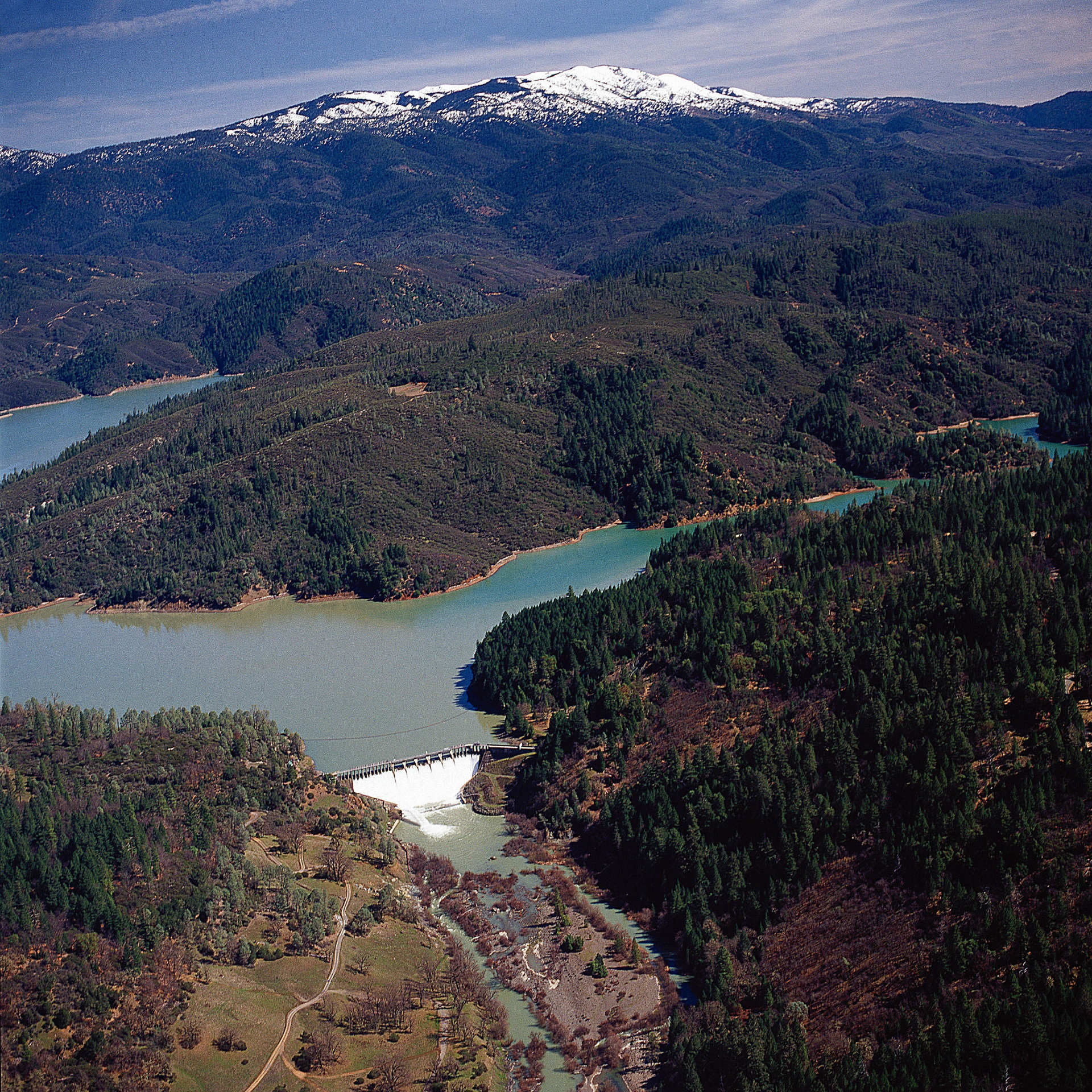
Eel River in California has been parched by a small, two dam hydropower
project, causing salmon and steelhead populations in the once robust fishery
to fall by 97 percent."
Power Play: the Sale of PG&E's Hydropower System and the
future of California's Rivers
PDF
report prepared by the Environmental Defence and the California Hydropower
Reform Coalitio
WATER CRISIS IN SONOMA COUNTY
Jenny Blaker/
the O.W.L. Foundations describes the current water crisis in Sonoma County
"Turning Water Into Wine", SF Chronicle 6/1/07
Thirst: Fighting the Corporate
Theft of Our Water: Jossey-Bass To:
Our community of water consumers, Water Contractors, fisheries supporters
and watershed restorers Turning water into wine
To water grapevines or not -- the roots of the wine industry's next great
controversy
Alice Feiring, Special to The Chronicle
This article appeared on page F - 1 of the San Francisco Chronicle
Friday, June 1, 2007
For years, I took the New World's thirst for vineyard irrigation for granted.
I believed what I was told: Napa Valley was a desert and needed its 100
to 200 gallons of water per vine per season.
I never realized how complex an issue water was until I visited northern
Oregon's Willamette Valley, where I noticed black irrigation pipes snaking
through the vineyards. The region gets 40 inches of rain annually, double
the oft-quoted number necessary to grow wine grapes without delivering
any extra water to the vineyard. I accepted the need for water in California
and even more so in desert-like eastern Washington. But the Willamette
Valley?
In the best vineyards of Europe, the practice of dry farming -- relying
solely on natural precipitation to water grapevines -- is almost universally
accepted. Yet in the New World, irrigation is now viewed as essential
to the wine industry's survival. And what began as a novel innovation
-- drip irrigation -- has become standard practice, such that throwing
dry farming into a viticulture conversation is like pitching a lit match
into a brittle summer forest. Who knew that something as simple as watering
plants could be so, well, hot?
Here's one reason why: California is anticipating drought conditions this
year. Most vintners who dry-farm aren't worried; they've seen it before
and have gotten through just fine. But some, like Kunde's Steve Thomas,
acknowledge that the future of viticulture will have to be sensitive to
water shortages. With global warming, drought-tolerant practices are likely
to become a way of life.
"We're going to have to start to think of it. It's got to be coming
down the road," Thomas says.
Whether adding water or withholding it, water management is a crucial
aspect of wine-grape growing, and drip irrigation can be found in about
70 percent of the state's 471,000 acres of wine grapes.
Originally, the preferred watering method was flood irrigation, in which
parcels of vineyard were deluged with water. According to Peter H. Gleick,
president of the Pacific Institute in Oakland, which studies global water
issues, flooding was quite wasteful, using 20 percent more water than
the current technology. It was replaced by drip irrigation, a method that
applies water in drops to each individual vine, which was devised more
than a century ago but refined by Israeli researchers after World War
II. Drip irrigation arrived in California in the 1970s.
And it was firmly in place when the devastating vine louse phylloxera
hit the state in the late 1980s. Large swaths of California vineyards
were replanted. One key decision during replanting was to ditch the drought-resistant
rootstock most of the state was planted on -- phylloxera-resistant St.
George as well as the popular hybrid AxR1, which had been thought to fend
off phylloxera but turned out to be vulnerable.
They were replaced with riparian rootstock -- water-loving stuff. Roots
that previously had to dig deep now hung out close to the ground -- and
that's where University of California Davis viticulture and enology professor
Larry E. Williams likes them.
"If you're a grape grower, you want to have that vine dependent on
what you do so you can manipulate them," says Williams, whose academic
work focuses on irrigation management. Williams further explained: "Since
the vine is getting most of its water from the drip system, then a grape
grower has greater control on how much the vine gets water."
The other objective for replanting was to mirror the density in Bordeaux
and Burgundy, up to 2,500 vines per acre instead of the previous status
quo of 450. Vines competed for the soil's water and prompted the need
for 100 to 200 gallons of water per vine per season -- each vine typically
produces two to four bottles of quality wine per year. Though water consumption
in California rose as a result, replanting helped revive the state's fine
wine industry, and the practices became standard.
But not all vintners are convinced. In Oregon, the Deep Roots Coalition
views irrigation as an unnecessary, terroir-occluding manipulation.
"When Oregon's wine pioneers ... planted the first vinifera wine
grapes in the north Willamette Valley, they understood that with the abundant
rainfall and careful attention to timely cultivation of the soil, irrigation
was just not necessary for the vines to thrive," says Doug Tunnell
of Brick House Vineyards. "Today, 40 years on, those same first vineyards
have yet to see a single drop of water from a drip hose."
Less water, more terroir
Pinning their belief on old-world wisdom about grape growing, the Deep
Roots Coalition's seven Willamette-based wineries believe dry farming
is the way to deliver a specific sense of place to a wine and one that
reflects the vintage -- not the viticultural decisions of the winemakers.They
believe that vines get addicted to water, that watering makes vines physiologically
lose track of when it is time to shut down and prepare for harvest, all
leading to less complex fruit.
One of the primary reasons they believe so fervently in dry farming lies
in the nature of grapevines and their miraculous roots, which can Roto-Rooter
through just about anything -- including granite and dense clay.
Loire Valley vintner Nicolas Joly, a guru of the biodynamic movement,
claims vines can wriggle down 60 feet into the ground. British wine writer
(and Chronicle contributor) Jancis Robinson writes in the "Oxford
Companion to Wine" that it's more likely 20 feet, and usually that's
in more arid areas like Portugal's Douro Valley, where vines must seek
precious water to nourish their grapes and stay alive.
Besides water, vines also suck up a diversity of minerals in the soil
that leave a minerally stamp on the fruit. In the right deep soils, and
if there are 18 to 20 inches of rain in the winter, conventional wisdom
dictates that irrigation is not necessary.
Europeans seeking fine wine associate irrigation with overcropping --
when vineyards have large yields of under-ripe grapes -- and generic table
wine, which prompted regional laws that outlawed the practice in places
like Burgundy and Bordeaux. Though the beastly hot summer of 2003 resulted
in some bending of the irrigation rules and further changes were announced
recently by French officials, the practice is still frowned upon as a
violation of terroir among the Old World's greatest wineries. But things
are never that simple.
UC Davis professor Williams acknowledged a few examples of California
vineyards that can dry-farm, many even in relatively arid Paso Robles
and others in Sonoma's Dry Creek Valley. But he talks about those remaining
old vines -- beautiful head-pruned gnarly vines, such as those found in
Kunde Estate's Century vineyard -- as oddities.
Growers' insurance
Steve Thomas is the vineyard manager of the 600-acre Kunde Estate in Kenwood,
out of which 100 acres are dry-farmed. Thomas said that even if he was
able to convert to dry farming he would keep the pipes -- installed to
the tune of $1,600 an acre -- as insurance to deal with the variability
of weather and for applying vineyard treatments such as nutrients, fertilizers
and pesticides.
Like many others, he underscored that if California returned to dry farming,
vintners would have to rip out rootstock, replace with drought-resistant
types and replant vines farther apart.
Which is exactly what Tablas Creek Vineyard in Paso Robles did when it
put in new plantings. Most of the property gets two deep waterings a season
with drip pipes. General manager Jason Haas says his family planted that
new plot in 2006 and 2007 -- totally dry farmed -- because they had no
water access on the vineyard.
They planted on 1103-P, a rootstock known for its excellent drought resistance.
Haas planted less densely, based on 600 vines per acre, more similar to
traditional dry farming in Paso than in Chateauneuf du Pape, where the
Perrin family -- a partner in Tablas Creek -- also farms vineyards.
Irrigation is part of the ongoing debate between traditional and modern
winemaking, Haas mused. "But it really depends on whether you are
trying to make a product that is consistent or a product that represents
that place and year in as compelling a way as possible," Haas says.
"It's like Fresno State (viticulture and enology) profs rolling their
eyes at the use of native yeasts (and saying), 'Well yes, if they want
to take that risk.' "
In Napa, soft-spoken winemaker Boris Champy takes such risks -- with both
native yeasts and dry farming -- at Dominus, owned by Christian Moueix
of Bordeaux's legendary Chateau Petrus.
"When I was in school in Bordeaux my professor told us about the
dry farming on the Greek island of Santorini, which illustrated how adaptable
the vine could be," Champy says. "Sometimes they only get 4
inches of rain a whole year. But because the soil is made up of crushed
pumice and is greatly absorbent, it transfers the tremendous nighttime
humidity as moisture to the vine."
Irrigation not only keeps vines well hydrated, it is a significant player
in manipulating fruit flavors and quality. Since the early 1990s, the
fashion in grape picking has typically been to leave fruit on the vine
until late in the season in order to elevate the level of Brix, a measure
used for grape sugar.
"Remember eucalyptus and green bean flavors?" asks Philip Coturri,
who runs a vineyard management company Enterprise Vineyards that specializes
in organic farming. "Those were due to unripe grapes. To get today's
super-ripe flavors the vines need hydration. Irrigations produce a very
different type of wine. Irrigation is a tool for extended ripening."
But isn't there a taste in between green beans and jam? What happens if
wine drinkers start wanting a less opulent style? Fashion changes, after
all.
Some wine writers and consumers have complained about high alcohol levels
and smack-you-over-the-head fruit coming from a long hang time and the
often-needed dealcoholizations and acidulations to correct them. Coturri,
who besides his family's eponymous farm in Glen Ellen works vineyards
for Hanzell Vineyards in Sonoma (which farms with little or no irrigation)
and Oakville Ranch Vineyards in Napa, doesn't see that happening. People
like the ultra-fruity flavors, he insists.
And then there's the money.
Unlike Europe, California's vineyards tend to be large, making it more
difficult to work the land manually and much more difficult to control
without irrigation. "As an organic farmer," said Coturri, "I'm
in demand. I pay my workers between $10 to $12 an hour. To do that I must
produce a consistent 2.5 to 3 tons an acre. On so many of these properties
if I dry-farmed them, I'd get 1.5 to 2 tons. It's a matter of sustainability."
But in addition to Dominus, such long-standing Napa properties as Grgich
Hills and Frog's Leap dry-farm. John Williams, founder of Frog's Leap
Winery in Rutherford, recalls buying his vineyards in 1987. "The
vineyards were dry-farmed but then I started to irrigate, because I came
from UC Davis. By God, we know how to take care of a vineyard!" he
says.
"Under irrigation, I soon realized the vineyards were not thriving.
Phylloxera attacked. Fortunately Frank Leeds, our neighbor then -- now
vineyard manager -- was driving by the vineyard and said to me, 'I don't
want to interject here, but you're killing that vineyard.' And that's
when he taught me dry farming. What are the great wines that built the
reputation of this valley -- the old Inglenooks and BVs? Not a single
one of those wines were irrigated."
Despite using AxR1, Williams' vines fought off the louse in the '80s.
He suspects that when he irrigated, the roots shrank up to the danger
zone that phylloxera inhabited in the soil. By reverting to dry farming,
the roots ran down to water and safety.
One essential requirement of dry farming in arid regions like California
is the need to plow the land. This keeps the soil sponge-like, ready to
absorb every bit of water that comes its way. If the land is hard or has
cover crops during the growing season, dry-farming can't be effective.
Ivo Jeramaz, Grgich Hills' vice president of vineyards and production,
agrees: "There's an old saying that one cultivation is worth two
irrigations." Jeramaz comes from Croatia, where soils are rocky and
the water is scarce. He also says that his vineyards resisted the louse
at Grgich's Carneros vineyard site, despite use of the vulnerable AxR1
rootstock. He believes his roots went deep enough to a sandy spot beneath
dense clay where they stayed safe. That said, there are no clear scientific
conclusions about any link between irrigation and phylloxera.
Art of dry farming
"Where irrigation is a science, dry farming is more an art. It's
not always possible, but when it is, it's the best option," conceded
Coturri, who oversees both farming options in his vineyard management
business. "You see, it's not what you do, it's how you do it. As
far as usage? Am I aware of the water I use? You bet I am. And the pavement
we put up depletes the aquifer more than vineyard irrigation. Growing
high-quality plants is a balancing act. I will use every tool at my disposal
to produce something that I love."
Those who endorse dry farming see things in a starker light. "The
mind-set of irrigation needs to be challenged. It is just like the great
gas-guzzling cars that we have decided are our God-given right to drive,"
says John Paul Cameron, an Oregon winemaker who's a founding member of
the Deep Roots Coalition. "Since water, like oil, is becoming an
increasingly scarce commodity, I believe that our position is the wave
of the future."
When pressed, others will often agree. The Pacific Institute's Gleick
first said dry farming was impossible. Later he reflected: "As water
gets more scarce, we might see a revival of dry farming. Water is still
pretty cheap, but when the cost goes up people will look to alternatives
and look at lessons from the past."
RE: Turning water into wine, Chronicle article
(response to above article)
article by David Keller, Bay Area Director, Friends of the Eel
River
June 1, 2007
This is a great article, and it ties together some of the water, fishery
and watershed/groundwater management problems in current viticultural
practices and our region.
[disclosure: I did make award winning organic apple wine for 10 years,
and took a series of classes at Davis, so I do have some first hand experience
with them, tho' I never grew grapes or made grape wine. The UCDavis program
seems to have been 'better, consistent industrial wine products through
chemistry, irrigation, pesticides, herbicides, fungicides and fertilizers.'
Definitely not the traditional French or dry farmed approach.]
RE: local water storage impacts
Unfortunately, local reservoir and pond storage, usually built along small
and ephemeral creeks, seeps, springs and streams on ranch properties,
significantly interrupt normal flows and runoff from these sub-watersheds.
As a result, there are in fact frequently unregulated but significant
damages to those creeks, the streams they feed, and the Russian River
(or other waterways) downstream.
This is the subject of a very heated debate at the State Water Resources
Control Board (SWRCB) going on right now, which compounds and intersects
with the problems that you've read about with the SoCo Water Agency's
recently granted petition for "urgency low flows" in the Russian
River. It's not just low water levels in Lake Mendocino that are problematic.
These mostly unregulated diversions of surface water for storage or direct
irrigation, have proven to be a major cumulative problem for the Russian
River. Trout Unlimited and Peregrine Audubon Society have petitioned
SWRCB to get control of an out-of-control situation on North Coast rivers
and streams. Under the California constitution, you cannot 'own' water
but can only have rights to 'reasonable and beneficial' use of it; the
SWRCB is the legal entity that regulates any one's rights to use water,
so clearing up this mess is up to this agency.
Right now, parts of the upper and mid- Russian River are "fully appropriated"
(meaning all the legal water that can be taken is already granted);
however, this is made worse by illegal and unpermitted diversions, leaving
the Russian River 'over-appropriated' during the late spring through fall,
when the rains start again. The Eel River diversions (through PG&E's
Potter Valley Project to the Russian River via Lake Mendocino) are used
to subsidize and mask this overdrafting of the Russian River, to the detriment
of the Eel River, its resources and population. The SWRCB's task
is to find and eliminate the illegal diversions, and they are ill-equipped
to do that, and with many ranchers not wanting them to do anything at
all. Thus, the upcoming public hearings at SWRCB on what to do, if they
should do it, and how to do it, coming up on June 19th.
http://www.waterboards.ca.gov/workshops/enforcement/revpn_workshop061907.pdf
The collective interruption and storage of the runoff by agricultural
ponds and reservoirs means that the downstream flows are reduced.
Part of the significant problems with the Russian River is a result of
all these impoundments: they reduce tributary flows, which then damage
spawning tributary streams (very important), the Russian River, and downstream
legal water rights holders, and of course, salmon and steelhead during
migration and juvenile stages and other public trust and instream uses.
In the Russian River basin there are many illegal and legal local reservoirs,
and more unprocessed water permit applications than in any other river
in the state. These small agricultural reservoirs, frequently not
overseen by any regulators, also fill up with gravel and sediments that
would otherwise flow downstream during storms, and as a result "starve"
the lower waterways from receiving new gravels and cleaning the existing
gravel beds necessary for fish spawning and rearing habitat. These sediment
deprived runoff waters produce "hungry water" flows which then
erode the banks and beds of these creeks as they flow downstream in storms.
"Hungry water" is water moving downstream that has lost, or
is deprived of, its sediment loads. Since moving sediment takes
energy from the flowing water, the resulting 'clear water' has more energy
to erode banks and lands downstream, picking up sediments and debris from
the banks and beds as it flows downstream.
Part of what happens in the Russian and Petaluma Rivers is a result of
just that, and can be seen as downcutting and bank erosion of both the
tributary streams and the river itself. Bad for fish, water quality,
riparian habitat and groundwater. Most all urbanized streams and many
tributaries of the Russian and other western rivers show these consequences.
The resulting erosion also causes loss of valuable topsoil, and the riparian
trees along the banks that provide critical shade and nutrients for the
creeks and streams. The erosion also cuts the stream beds down to
a lower elevation, which then start to drain the associated groundwater
into the lowered creek bed and result in lowered groundwater tables nearby.
The reduced runoff also reduces the ability to recharge downstream groundwater
basins' permeable gravels, sands, soils and fractured rock.
Another issue with ranch storage is the water taken from streams, springs
and creeks for "frost protection" for crops, in addition to
water for irrigation. This water is also frequently unregulated
and unpermitted, and contributes to the degradation of these streams and
have all the downstream impacts noted above.
The consequence of all of these practices, in combination a host of other
problems, such as water diverted for municipal and industrial purposes,
gravel mining (of the very gravels and sands of the Russian River aquifer
which store and cleanse the storm waters), polluted urban and road runoff,
sewage discharges, clear cutting of forested slopes, loss of riparian
trees and shrubs, high temperatures and a few other human-caused problems
have led to the decimation of salmon and steelhead in the Russian and
Eel Rivers.
So, enjoy that wine, but be aware that there are consequences of what
methods are used to produce them, and that there are choices made by different
vineyards as to what role they will play in either continuing damages,
or in their role in the path to restoration of these precious and irreplaceable
watersheds. We don't get another watershed to live within. Ever.
David
David Keller
Bay Area Director
Friends of the Eel River
Back to top
|