HOME

TABLE OF CONTENTS

Letter from Nada

Big Oil Threatens Our Coast

Letter from Marin

What’s Happening to the Eel Map

Photographic Journey Down the Eel

Directory of Our Supporters

Photographic Journey Down the Eel

Hovering over Lake Pillsbury we are looking right at Sanhedrin to the left and Hull and Bald Mountains on the right. There is a considerable amount of drainage, lots of springs and creeks that feed the Eel River.
The next photo is of the first spring on the flanks of Hull and Bald Mountains. The third is a swimming hole, cold, large and beautiful above the area called Bloody Rock. What the white man did in this watershed is memorialized in the naming of places.

Below is a view from Bald Mountain looking at the drainage that forms the Eel River with Sheet Iron and Snow Mountains behind. Next is a photo from the same spot but facing Sanhedrin and mountains beyond.
Third: The first major creek to join the Eel is Corbin Creek, running full and cold in early spring and through most of the year. This is also a massive watershed like most tributaries that form the Eel.

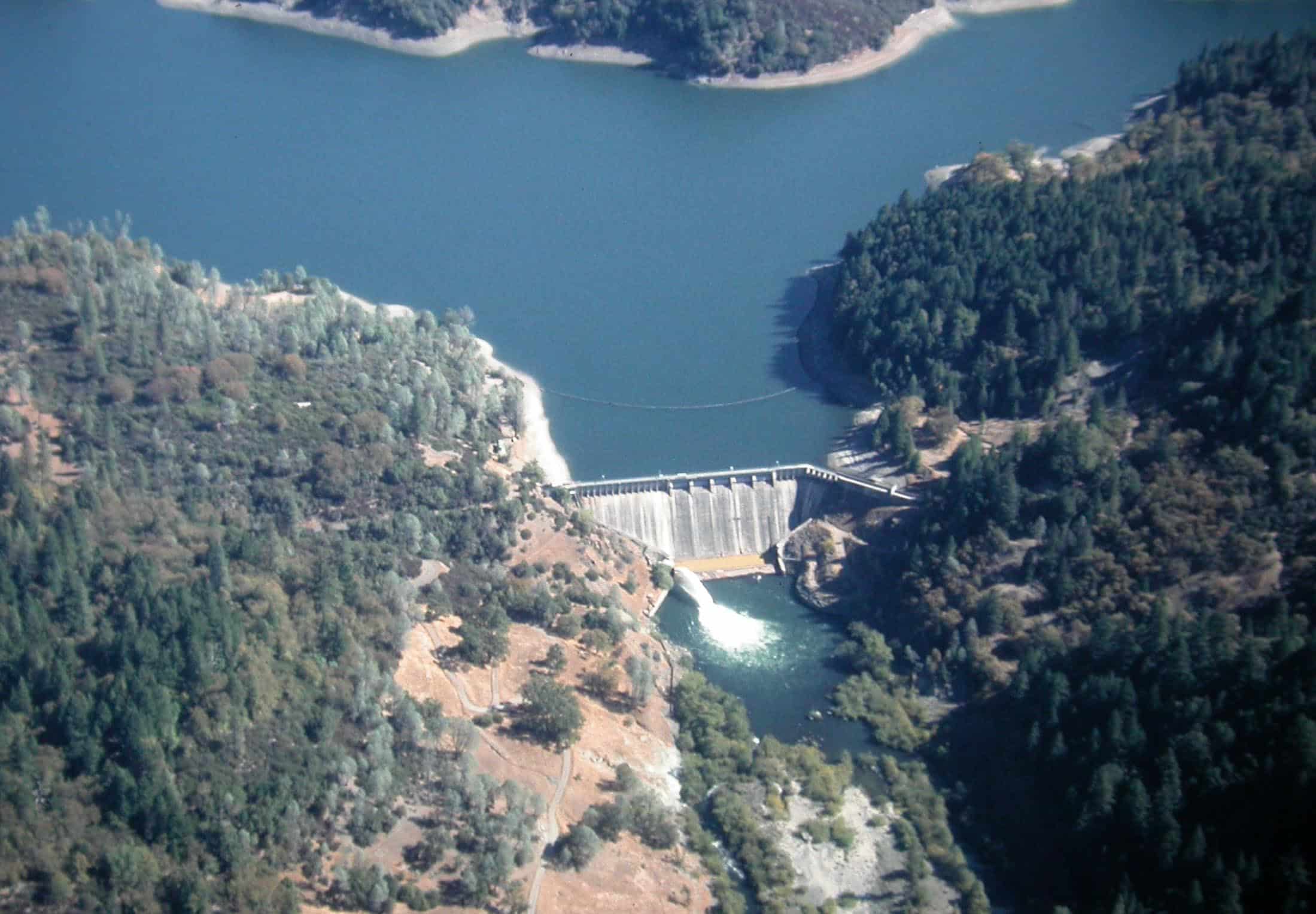
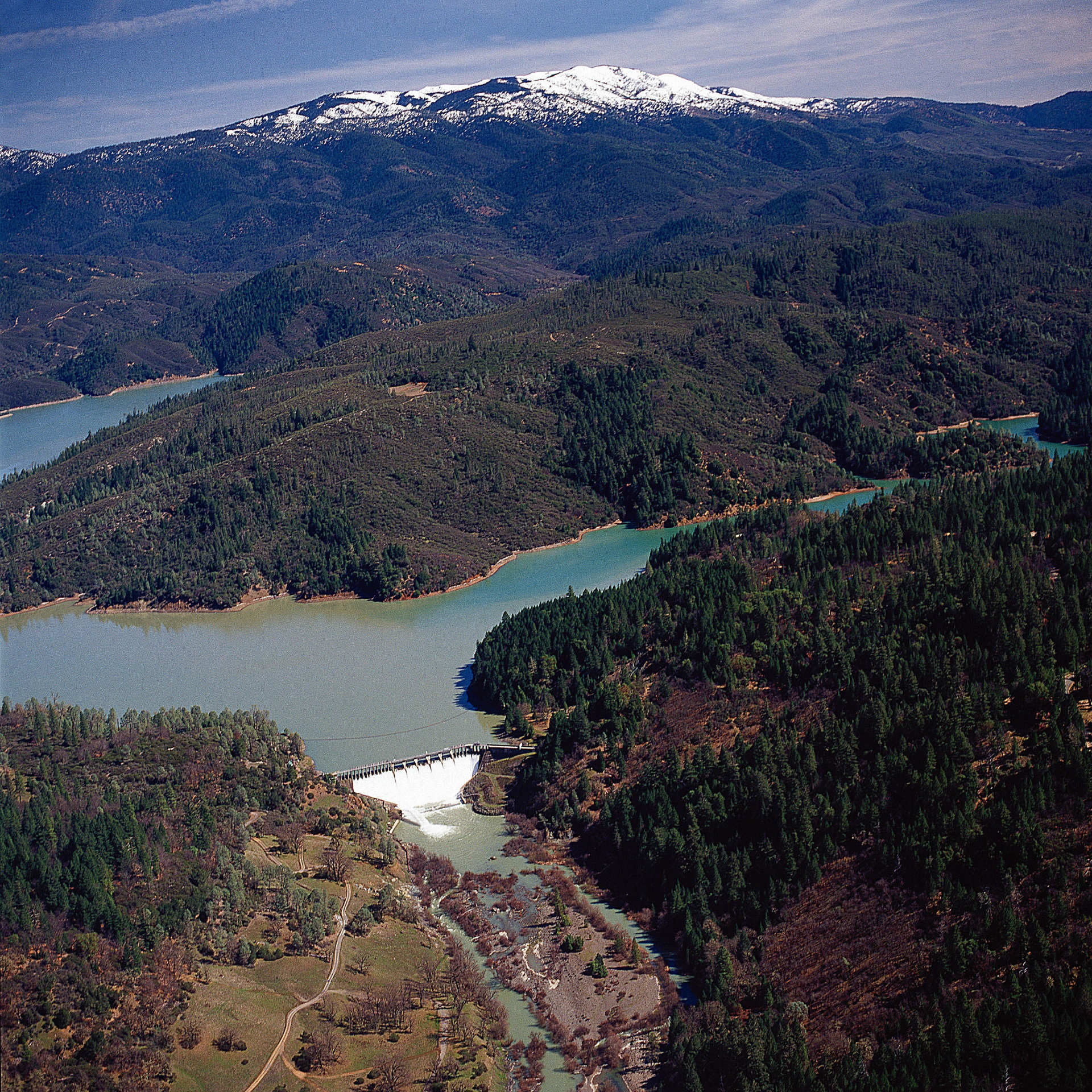
Hovering above the Lake Pillsbury we turned the helicopter slowly in a circle to capture the photos used to create these panoramas. Here we are looking at Rocky Point at the end of McLead Ridge with the Rice Fork on the left and Scott Dam to the right. The lower photo on the right shows Scott Dam with the McLead Ridge and a portion of the Rice Fork. Dominant in the back ground is Snow Mountain, crowned with snow.

Crossing the Rice Fork along Mendocino National Forest road M10 in search of the 129 miles of prime salmon spawning and rearing habitat as stated in a Forest Service study. A few years later I traveled the same road looking for signs of water in the late fall and found Lower Nye to be prolific with cold water. This area is on the edge of the Snow Mountain Wild Life Refuge. I am hoping to circumnavigate the entire area this next year, but it takes many days on fairly good dirt roads and a vehicle in good shape to make the trip. I have done most of it over the years except for the portion through the Wildlife Refuge, Sheet Iron and around back to Bald Mountain. Let me know if you would like to join me on this adventure in late summer 2006.

The helicopter turned again for me so I could photograph the Eel where it enters Lake Pillsbury, showing the watershed it comes from. Note the burn area on the right of the photo. Much of this area has been heavily logged and later fires reduced much of the area to miles of brush. You can see it more clearly in the photo on the next page of the same area only looking from the road down to the Eel branch as it travels toward the lake. The photo on this page left is again the same area looking back out to the lake. On the far photo it is easy to see the amount of silt that gives one the impresson from the lake that no water is running into the lake in late summer as the water goes under the gravel. Note further upstream the presence of water.

Below, a panorama showing Potter Valley community above the ridge line, the wooded slope on the Eel side with Cape Horn Dam and the diversion tunnel which is just to the right above the dam. Note the residences immediatly down stream the scientists forgot to take into account when they wee deciding how much water the Eel fish needed to barely survive. All these homes have water rights too.
To the immediate left are photos of the actual diversion tunnel, looking ever so sinister as the machine that turns fish into fertilizer for the Potter Valley farmers delivered on tap. We call Potter Valley fish emulsion green for good reason. Below that is part of the first fish ladder built in the state back in the early 1920’s. What you don’t see in this photo is the horseshoe curve the ladder takes and the baffeling enterance that about half of the fish manage to find.
The upper photo is one of my favorites taken Easter morning at dawn after camping on the river bar preparing for the drive up to Bald and Hull Mountains. We could not make it all the way since snow was still in the very highest elevations, but the creeks were all full and sing so merrily as it bounded over rocks on its way to becoming a river.

Roads & Watercourses Around Lake Pillsbury

After Cape Horn the rivers continues it’s journey with the upper photo showing Tomki Creek entering from the right. Then comes the famous bends at Hearst, left photo, and eventually is joined by Outlet Creek full from the Willits area watershed. Note the bridge crossing known locally as “legal bridge”.

Dos Rios, two rivers confluence, with the Middle Fork Eel River coming in on the left of the bridge, joining the Eel River. This area has several launching spots for the four day run down the Eel River Canyon that ends at Alderpoint. You can do the run in less time but we so enjoy being able to stop and explore side creeks with amazing rock formations. There are no roads in this truly wilderness stretch which makes for an unprecedented run during the spring high water, with class 3 and 4 rapids, depending on the height of the flows. One can continue from here clear out to the ocean, but after Alderpoint it is all class 1 & 2, a lovely float through some beautiful landscape with no roads but the railroad.

On the left is the first major slide that has taken out some of the railroad tunnel that continues to worsen over time. We have watched the progression of the big rocks moving down slope and this past year several big boulders reached the river.

Below are photos of the kind of landscape you will see in the canyon. More pictures on the following pages show some of the outstanding rock formations found in the river and as outcropings all over this watershed

BELOW: In the upper photo you are standing in Bell Springs creek looking at the Eel as it bends it’s way down river, traveling from right to left. This is a panorama we put together from photos taken by Mike Guerriero on our April 2005 river trip. The lower picture is looking up river towards Bell Springs taken from Fred Baron’s Piper Cub in late summer. The railroad continues on through this area.
Photos on the below that are of the confluence of the North Fork. Also taken from the air during the late summer documenting the year round conditions. I finally had a chance to visit friends up the North Fork and saw how steep the area is. When we went down to their favorite swimming hole we passed by this footbridge and saw the beauty of yet another monolith by the pools edge. With such beauty, lots of wildlife it is easy to understand the love of solitude.

Heart of the Eel
My very favorite rock on the whole river. The colors and texture give this formation its’ name.

Island Mountain, once a bustling railroad station and noted for its’ railroad bridge and tunnel. The large rock in the middle photo is of a hard rock mine that has been mined periodically since 1915. Plans for reopening this mine are tied to major repair of the railroad only if the environmental concerns are addressed and a well thought plan is presented to the general public for approval.

Here the river is flowing from top to bottom in a panorama of aerial photos with Alderpoint at the bottom. The bridge here is one of only five that cross the Eel River. This is where we take out from what is known as the Dos Rios run. There are services here that accommodate vehicle storage for boaters, general store and post office. Once a busy town with two sawmills, fishermen and hunters. Now it is a quiet little town in the middle of this wild and scenic river. Once steam boats came up river to collect passengers, lumber and visitors. Now with the silt impacted river boating can only occur during the winter and spring rains. Locals enjoy an easy float from Alderpoint to either Ft. Seward or further downriver to Eel Rock.
We call those rocks house rocks because of their size. More Eel River monoliths.
Note the shades of yellow and green that identify algae that is a plague to this system. It is hard to believe so lovely a river could change so much and have so much algae. Cumulative impact of all diversions.

I was shocked to hear Steiner Engineering state that there were no down-stream users of Eel River water. Here at Camp Grant and the following page of farm land at Shivley where irrigation was not necessary until the water table started dropping when PG&E increased its diversions to accommodate the Sonoma County Water Agency in the 1950s.

This photo of logging on steep slopes tells the tail of why the Eel River has moved from one of the most pristine rivers in the world as written up in a 1940’s sportsman magazine, to carrying a silt tonnage fifteen times greater than the Mississippi. This is our top soil washing off the slopes, filling the river. This area was held together by redwoods with their root network and ability to turn fog into drip contributing water at the end of the long dry summer.

Down river from the confluence with the South Fork Eel.

River bluffs at Scotia, across from Rio Del, with railroad bridge.

Pacific Lumber at Scotia. There is a gage at this site that measures the cumulative flow of the river that the Sonoma County Water Agency, Potter Valley vintners, and PG&E quote to show that the percentage they are diverting from the river is small. Typical of corporate spin this illusion is used to mask the damage being done to the entire system, especially the 50 miles between the lower dam and Dos Rios.

Two bridges, the upper old one connects Rio Del with Scotia. The newer one, Highway 101, by-passes town. Major changes are afoot for these towns as the mill has been reducing its operations, but at the same time modernizing there by needing far fewer people, to operate the mill. Homes from Scotia are going on the market as Pacific lumber changes it’s zoning from being a company owned town. Rio Del seems to be growing as this is one of the few remaining affordable places in Humboldt County.

The closed lumber mill at Carlotta with the heavily damaged Van Duzen behind as shown by the wide, silted Van Duzen showing as a light brown along the upper part of this photo. The photo at the bottom right was taken from the bridge at its mouth. The photo on the lower right is up river of Carlotta and was taken on my helicopter ride.

Looking up river with Fortuna on the left and gravel yard on the right. Sort of mid photo where the road ends at the river is the beautiful River Lodge and our favorite brewery with its prize winning beers from the Eel River Brewery.
Lower left is the famed Ferndale Bridge with the Humboldt Creamery at the end of the bridge. Note the farm land. This is where the Humboldt cheese comes from, good soil, green pastures, lovely sun and happy contented cows. Oh yes, we love our local cheeses and now organic ice cream from the Humboldt Creamery to boot.

Cock Robin island in the fertile Eel River estuary.

The mouth of the Eel River where it enters the Pacific Ocean. On the left is the upper tip of Cock Robin Island. On the right is the tip of land that seems to me to be like a big tongue. Where the road, named Cannibal Island, ends is Crab Park, a great place to put in for an Eel estuary kayak trip. The birds are abundant and flutter up out of the grasses as we slip by. To find out about kayak and canoe trips contact Mike Guerriero, info on content page.

Our Fish Tent has been visiting the Humboldt and Marin County fairs, Arts Alive in Eureka, Autorama in Fortuna, Fleet Week in San Francisco, Kate Wolf Festival, Earth Dance and the Mateel Spring Fair. We would love to come visit your event too! Over a dozen panels inside tell the story of the Eel River and its salmon. Designed by Mike Guerriero who worked with Dorji Bond of Intents to fabricate this unusual information display for Friends of the Eel River. Mike also created our very interesting display panels. The tent needs a space at least 30 feet in length. Call our office at 707 923-2146 for more information.

Tent crew at the 2005 Kate Wolf Festival, Black Oak Ranch, Laytonville. Lisa Gibson, Michael Reynolds, Jon Spitz, Mona Krupski, Nadananda, and Richard Francovitch were lead by Mickael Guerriero in getting the tent up in record time. A wonderful group of volunteers and a pleasure to work with.

The Friends of the Eel River has an active group in Fortuna. Most are long time residents of the Fortuna area. Their interests are in educating the Eel River valley residents on current and history issues pertaining to the watershed and acting as advocates for the river when necessary. The Fortuna Eel River Group has a goal of establishing an office and public display aimed at education and supporting all the watershed organization in the region. In the past couple of years they have set-up and attended with the fish tent exhibit at the Humboldt County Fair and at the Fortuna Auto Rama. They support the Friends of the Eel River by distributing the Eel River Reporter, fundraising and by representing the organization at public meeting. The Fortuna group generally meets once a month, about ten time a year. This summer we held one of our meetings out on a kayaking trip on the estuary. We generally contact and plan meetings through a list of e-mail address. If you would like to join us, contact Michael Guerriero, mguerro@northcoast.com, Bill Thorington, tcgroup@cox.net or call the FOER office for information on the next meeting planned. 707 923-2146

Two-time winners. First Place Civic Entry at the Fortuna Rodeo Parade


Saving the Eel for the Next Generation